



How to Stop Puppy Biting: Complete Guide to Teething

A puppy who grabs sleeves, hands, or pant legs can make ordinary moments feel exhausting. Mouthing and nipping are common parts of puppy development. But that does not mean you have to simply tolerate painful bites or hope your puppy grows out of them. The goal is to teach your puppy what to do with that energy while building trust and clearer communication.
Shop The Sidekick(R) Transitional Leash(R) to support calm communication during training , this behavioral training leash is designed to help you guide your puppy toward better choices during walks, play, and everyday interactions.
To learn how to stop puppy biting, pair appropriate outlets and timely redirection with relationship-based training that helps your puppy regulate emotions. Respond to natural guidance, and make better choices.
Once you understand what your puppy is communicating, the next step becomes more practical. Teething, exploration, play, and overexcitement can all look like biting, yet each may call for a slightly different response. Start by looking at why puppies mouth and nip, then you can choose training strategies that support both your puppy's development and your relationship.
Why Do Puppies Bite? Understanding Puppy Mouthing and Nipping
Puppy biting can feel personal, especially when sharp teeth meet your hands, sleeves, or a child's fingers. In most cases, though, mouthing is a normal part of early development. Understanding what is driving it helps you respond with natural guidance instead of frustration and gives your puppy a clearer path toward better choices.
Teething makes chewing feel necessary
A puppy is born without teeth, then develops 28 deciduous teeth before replacing them with 42 permanent teeth. That transition generally unfolds from about 3 to 7 months, when sore gums and the pressure of emerging teeth can make chewing especially appealing. Your puppy may seek relief on anything nearby, including hands, shoelaces, furniture, and clothing. Providing safe, appropriate outlets for chewing can help, but remember that teething is only one part of the picture.
Mouths are how puppies investigate the world
Puppies explore the world through their mouths, much as human babies use their hands. A new texture, moving object, or interesting scent may invite a quick nibble. Your puppy is also learning how much pressure is acceptable through interactions with littermates, people, and other dogs. A behavior that seems cute at seven weeks can become genuinely difficult when the puppy is three or four months old, larger, and stronger. The VCA overview of puppy play biting explains why mouthing is a normal developmental behavior that still needs guidance.
Play and overexcitement can turn into nipping
Chasing, tugging, wrestling, and fast hand movements can activate a puppy's play instincts. When excitement rises faster than your puppy can regulate it, playful contact may become frantic grabbing. Overtired puppies often look especially mouthy because they have lost the ability to settle and make thoughtful choices. Pause and observe the context: Is your puppy hungry, tired, overstimulated, or trying to start a game?
Not every bite has the same meaning. The CDC notes that dogs may bite when they are scared, nervous, playing, eating, or protecting toys or puppies. That context matters when deciding how to respond. Safety matters, too: nearly 1 in 5 people bitten by a dog requires medical attention, according to the CDC. Learning why the behavior occurs is the first step toward helping your puppy develop emotional regulation and safer communication.
How to Stop Puppy Biting with Natural Guidance Techniques
The goal is not to punish a puppy for using its mouth. It is to give that mouth a better job while teaching the puppy how to regulate excitement and respond to communication. Bite inhibition is a crucial part of managing puppy nipping, and relationship-based training helps the puppy work through pressure, regulate emotions, and make better choices. That approach protects your bond while making everyday interactions safer. For a deeper look at how training builds trust, read about the foundation of behavioral training.
-
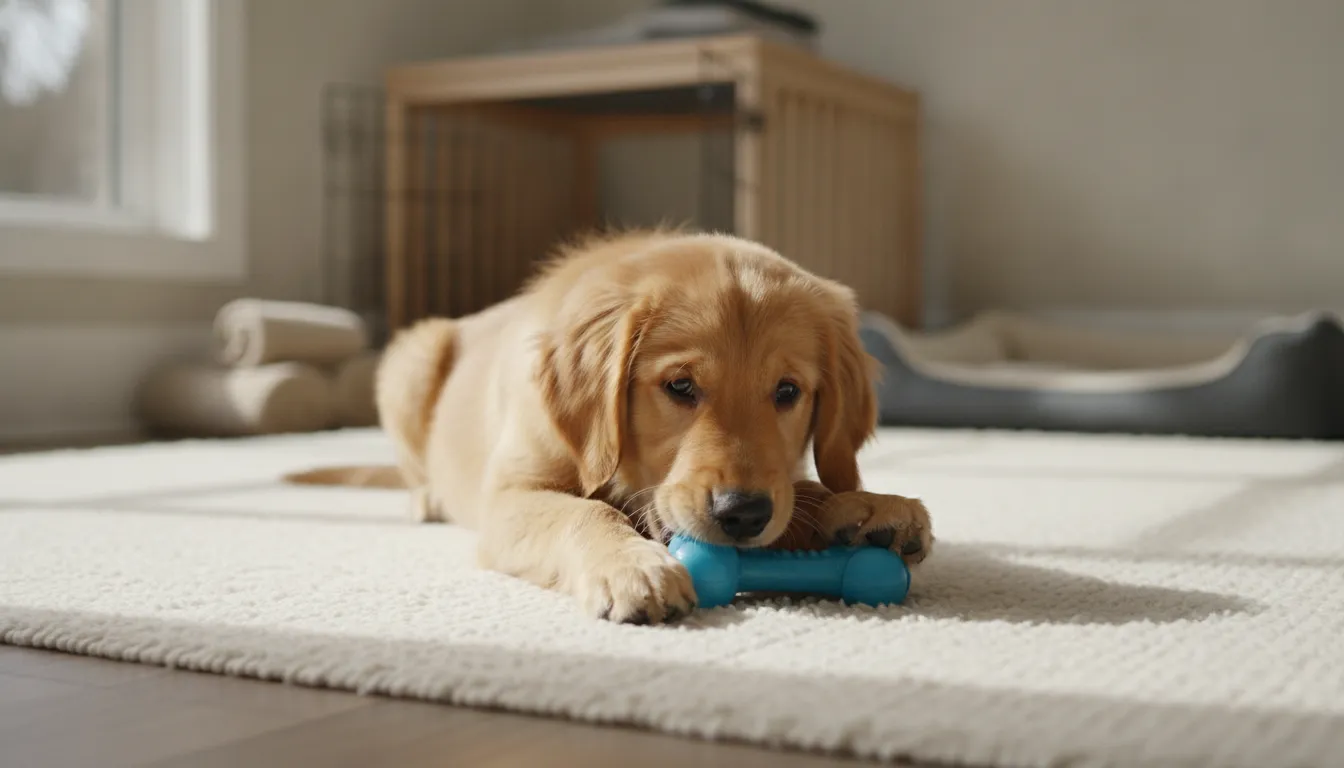
Redirect the bite to an appropriate toy. Keep a few durable puppy-safe chew toys within reach in the rooms where your puppy plays. When teeth touch your hands, clothing, or ankles, calmly bring the toy into the interaction and move it so your puppy can follow and grab it. As soon as your puppy chooses the toy, continue the game or offer praise. This teaches a clear replacement behavior instead of repeating "no" without showing what to do next. Rotate toys to keep them interesting, and supervise chewing so damaged pieces can be removed.
-
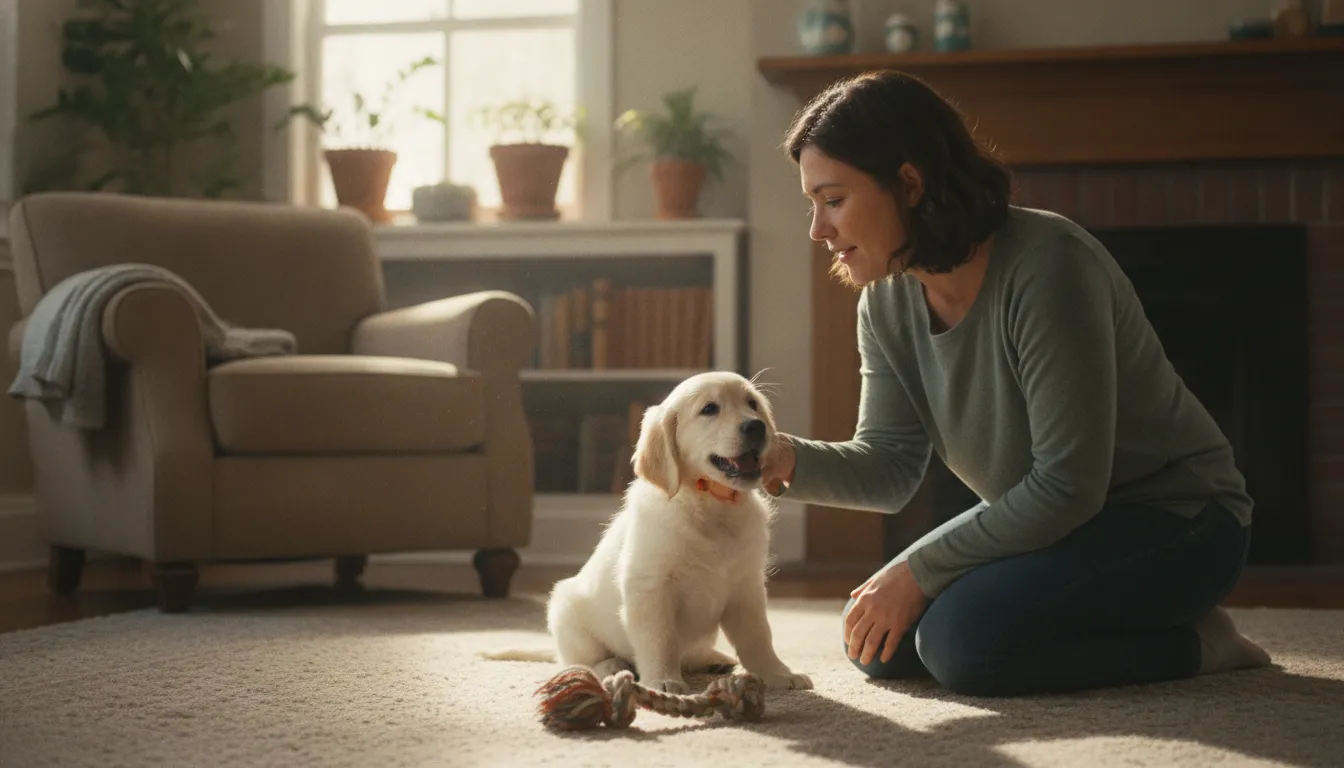
Use a yelp and turn away when play becomes too intense. If your puppy bites hard, make one brief, high-pitched yelp, then turn your body away and pause. Avoid a dramatic reaction that could make the moment more exciting. Wait a few seconds for your puppy to soften, settle, or redirect attention. Then offer a toy and resume only when the interaction is calmer. This gives useful information about bite pressure and helps your puppy learn that harder biting makes play stop.
-
Use time-outs as a calm reset, not a punishment. If redirection and a brief pause do not help, quietly end access to the game. Step behind a gate or guide your puppy to a safe, puppy-proof area for a short reset. Keep your voice and movements neutral. Once your puppy is able to think again, reconnect and offer an appropriate activity. Repeated, predictable resets teach that calm behavior brings access back, while frantic biting does not control the household.
-
Practice the Zen Zone Technique(TM) when your puppy is over-aroused. Many biting episodes happen after play, visitors, or too much stimulation. Before your puppy reaches the point of grabbing everything, reduce activity and guide them toward a quiet, familiar space. Use slow movements, simple communication, and a suitable chew or calming activity. The purpose is to help the puppy notice rising emotion and return to a state where learning is possible, not to isolate the puppy for making a mistake.
These techniques work best when everyone responds consistently. For more guidance on building communication and helping your dog make better choices, explore our relationship-based training techniques.
The Teething Timeline: What to Expect as Your Puppy Grows
Teething can make a puppy seem determined to chew everything within reach, including hands, sleeves, furniture, and shoelaces. The discomfort is real, but the behavior is also part of a normal developmental transition. Knowing what is happening in your puppy's mouth makes it easier to provide appropriate outlets while teaching better choices.
Three to four months: chewing often reaches its peak
Puppies begin with 28 deciduous, or baby, teeth. As those teeth loosen and fall out, permanent teeth begin moving into place. The most intense part of this process commonly occurs around 3 to 4 months, when the gums may feel tender and chewing can provide relief. This is often the age when playful mouthing that seemed manageable at seven weeks becomes much more uncomfortable for people because the puppy is larger and stronger.
At this stage, biting is not always a sign of defiance or aggression. A puppy may be exploring, playing, seeking interaction, or trying to soothe mouth discomfort. Offering safe chew options and calmly redirecting your puppy helps meet the underlying need without allowing human skin to become the preferred outlet.
Four to seven months: adult teeth arrive in stages
The permanent teeth do not all appear at once. Incisors generally come in first, around 3 to 5 months. Canines typically follow at about 5 to 6 months, while premolars and molars may emerge between 4 and 7 months. These ranges overlap, so two puppies the same age may be at different points in the process.
| Tooth Type | Age Range (Months) | Number of Teeth |
|---|---|---|
| Deciduous (baby) teeth | Birth to 2 months | 28 |
| Incisors (front teeth) | 3 to 5 months | 12 |
| Canines (fang teeth) | 5 to 6 months | 4 |
| Premolars and molars | 4 to 7 months | 26 |
| Full adult set | 6 to 7 months | 42 |
The timeline is summarized in this puppy teething reference.
As adult teeth replace the baby set, your puppy may continue to chew, but the reason and intensity can shift. Some chewing is still motivated by gum discomfort. Some comes from habit, excitement, boredom, or a puppy who has not yet learned how to regulate energy during play. Continue to guide the behavior rather than assuming the calendar alone will solve it.
Six to seven months: most teething-related biting eases
Most puppies have their full set of 42 permanent teeth by about 6 to 7 months. Chewing caused specifically by the teething process should begin to settle as the adult teeth finish coming in. That does not mean every puppy stops putting things in their mouth on a particular day. It means the physical discomfort that intensified the behavior is usually fading, giving consistent training and daily routines more room to work.
Keep watching the whole picture. If biting remains intense, escalates with fear, or does not improve as your puppy matures, look beyond teething and consider the puppy's emotional state, environment, and learned patterns. Natural guidance can help your puppy work through those feelings and practice calmer ways to interact.
Setting Your Puppy Up for Success: Routine, Enrichment, and Rest
A puppy who is overtired can look as though they have suddenly forgotten every lesson. The biting gets faster, the body gets wiggly, and a playful interaction can turn into grabbing sleeves, ankles, or hands. A predictable rhythm helps your puppy know when to sleep, explore, train, chew, and play. That structure does not remove fun. It gives your puppy enough recovery time to make better choices. If your puppy struggles to settle on their own, these steps for teaching calmness offer a practical starting point.
Build rest into the day
Crate training can support enforced naps when your puppy is too tired to settle independently. After a short activity, offer a safe chew, guide your puppy into the crate, and let the environment become quiet. Keep the crate associated with rest and security, not punishment. Puppies vary in how much sleep they need, so watch the individual in front of you. Increasing mouthiness, frantic movement, and an inability to respond to familiar cues are useful signs that rest may be overdue.
These pauses also give you a chance to practice managing puppy emotions. Settling is a skill, and your puppy learns it through repeated, supported experiences.
Give busy mouths appropriate work
Keep several approved chew options available and rotate them so they stay interesting. A stuffed Kong, an appropriately sized bully stick, or a puppy-safe teething ring can provide a clear alternative to human skin and clothing. Choose products suited to your puppy's size and chewing style, supervise use, and remove anything that becomes small enough to swallow or begins to break apart.
When your puppy reaches for your hands, calmly place a suitable chew within reach and engage with that choice. The goal is not simply to interrupt biting. It is to show your puppy what belongs in their mouth and reinforce the behavior you want to see again.
Balance physical play with mental stimulation
Short training sessions, food puzzles, scent games, and simple problem-solving activities can tire a puppy without pushing them into frantic arousal. Keep sessions brief and end while your puppy is still able to think. Several small sessions usually work better than one long session that leaves a puppy overstimulated.
For walks and calm exploration, The Sidekick Transitional Leash is a behavioral training leash designed to support communication and calm thinking. Pair tools with natural guidance and a steady routine. With enough rest, appropriate outlets, and practice making good choices, your puppy has fewer reasons to use biting as their answer to every feeling.
When Puppy Biting Needs Professional Help
Most puppy mouthing is part of play, teething, and learning bite inhibition. The bigger question is what your puppy's whole body is communicating. A playful puppy usually has a loose body, relaxed movement, and can return to calm with redirection or a short break. A puppy who repeatedly bites with escalating intensity may need a more individual plan. If you are working with a rescue or shelter puppy, choosing the right care environment can also support your training efforts.
Warning signs that deserve attention
Contact a qualified trainer or behavior professional if biting comes with a stiff body, hard staring. Repeated growling, guarding food or toys, or a bite that is fast and difficult to interrupt. Fear-based biting also deserves prompt support. Watch for cowering, retreating, tucked posture, trembling, or snapping when your puppy feels cornered or handled. Dogs may bite when they are scared, nervous, playing, or protecting resources, so context matters as much as the contact itself. The CDC's dog-bite guidance is a useful reminder to take safety seriously, even when a bite began during play.
Seek help sooner rather than later if your puppy is breaking skin. If bite inhibition is not improving with consistent natural guidance, or if children and visitors cannot safely interact with the puppy. A professional can observe the trigger, help you manage the environment, and teach you how to help your puppy regulate emotions and make better choices. This is not about labeling your puppy as bad. It is about giving both of you a clearer path forward. Become Your Dog's Hero(R) provides the complete method for relationship-based training, while The Sidekick(R) Transitional Leash(R) can support communication and safer handling as you practice.
What to do after a minor bite
If a bite breaks the skin but appears minor, wash the wound with soap and water. Apply antibiotic cream or ointment, and cover it with a clean bandage, as recommended by the Mayo Clinic. Contact a medical professional for deeper wounds, signs of infection, or any concern about your health. Separate the puppy calmly and address the training question after everyone is safe.
For ongoing support through every stage of puppyhood, explore our complete library of dog training and care articles, including guidance on leash reactivity and introducing the Sidekick leash to your puppy.
Frequently Asked Questions
When do puppies usually stop biting?
Biting often becomes most intense during the teething months, then gradually decreases as adult teeth come in and your puppy learns better ways to interact. Most puppies have their permanent teeth by about six to seven months, but mouthiness can continue longer when a puppy is overtired, overexcited, or still practicing self-control. Consistent redirection and rest help the behavior improve.
Is puppy biting normal, or does it mean my puppy is aggressive?
Mouthing is a normal way for puppies to explore, play, and communicate, but the context matters. A loose, wiggly puppy who pauses, redirects. And can recover is showing a different pattern from a puppy who repeatedly bites with a stiff body, fearful behavior, guarding, or escalating intensity. Since dogs may bite when scared, nervous, playing, or protecting resources, observe the whole interaction rather than labeling the puppy after one incident. The CDC outlines common situations that can lead to bites.
How can I teach bite inhibition without punishing my puppy?
Help your puppy learn that human skin ends the game while appropriate toys keep the interaction going. Calmly pause when teeth touch you, offer a suitable chew or tug toy, and resume only when your puppy can engage with better control. Pair this redirection with natural guidance that helps your puppy regulate emotions and make better choices. Bite inhibition is a key skill, so practice in short sessions and reinforce calm behavior throughout the day.
What should I do if a puppy bite breaks the skin?
Wash a minor wound with soap and water, apply antibiotic cream or ointment, and cover it with a clean bandage. Seek medical guidance for a deep wound, significant bleeding, increasing pain, redness, swelling, drainage, fever, or any concern about infection or vaccination status. Mayo Clinic provides additional first-aid guidance for animal bites.
Ready to Build Better Puppy Habits?
Learning how to stop puppy biting takes consistency, clear communication, and a relationship-based approach that helps your puppy make better choices. If you want personalized support applying these techniques to your puppy's behavior, visit Heather's Heroes online to explore our training courses and tools. Call Heather's Heroes at (970) 452-0358 to learn more about the next step in your training journey.



Leave a comment