



How to stop dog from pulling on leash without force

A dog who pulls is not trying to make your walk difficult. Often, the sights, smells, and movement around them are simply more exciting than staying connected with you. The goal is not to overpower that excitement. It is to help your dog notice your guidance, regulate their emotions, and make a better choice.
To learn how to stop dog from pulling on leash, build calm communication first. Then practice rewarding slack, reconnecting before tension builds, and using natural pressure points to guide attention. Short, consistent sessions help loose-leash walking become a shared skill instead of a repeated battle.
Explore Become Your Dog's Hero
Once you understand what pulling is communicating, the next step is choosing training responses that build trust and clear boundaries. That starts with looking at why force can make the pattern harder to change.
Why dogs pull and why force can make the problem harder
Pulling is usually a communication problem, not a sign that your dog is trying to make the walk difficult. Your dog may be excited by a scent, eager to reach another dog, or simply moving toward an interesting sight. Some dogs also bring strong instincts to the walk. Breeds developed for sledding, tracking, or other working tasks may need extra patience and clearer expectations while they learn a new way to travel with a person.
That context changes the first question. Instead of asking, "How do I stop this behavior right now?" ask, "What is my dog feeling. And what choice am I teaching?" Loose-leash walking is a skill that develops through practice. The goal is not to suppress your dog's interest in the world. It is to help your dog regulate emotion, reconnect with you, and make a better choice while moving through it.
Corrections can make that learning harder. A sharp or repeated correction may interrupt forward motion, but it does not necessarily show your dog what to do instead. If the dog is already worried, frustrated, or overstimulated, added discomfort can increase tension and make the trigger feel even more significant. Veterinary behavior guidance notes that punishment can damage the human-animal bond, which is the opposite of the trust and communication needed for dependable leash skills. UC Davis Veterinary Medicine explains the foundations of loose-leash walking, including why the training approach should account for the individual dog.
A relationship-based approach gives both ends of the leash a clearer job. The handler brings calm body language, consistent boundaries, and timely feedback. The dog learns that checking in, softening the leash, and walking with the handler lead to useful outcomes. Such as praise, a treat, or continued access to the walk.
This is natural guidance, not a battle for control. With consistency, the dog can learn to work through pressure, regulate emotions, and choose connection without losing the chance to explore.
How to stop dog from pulling on leash by building calm
A loose leash begins before you reach the sidewalk. If your dog explodes with excitement at the sight of the leash, rushing through the doorway can make pulling the first habit of the walk. Pause and help your dog settle before you ask for distance, speed, or perfect focus. The goal is not to create a robotic walk. It is to help your dog regulate emotion, notice your guidance, and make a better choice.
Start with connection in a quiet space. Stand near your dog, soften your shoulders, and wait for a glance or a moment of stillness. Mark that choice with calm praise, a small food reward, or permission to investigate the environment. Reward timing matters. Deliver the reward while the leash is loose and your dog is oriented toward you, not several seconds after the dog has surged ahead.
Dogs are more likely to repeat behavior that consistently produces a useful result, including praise, petting, or treats for walking nicely beside you. UC Davis Veterinary Medicine explains this reward-based approach.
Use short practice sessions
Practice for a few minutes at a time, then stop while your dog is still able to think. Begin in a low-distraction area such as a hallway, driveway, or quiet patch of grass. Take one or two steps. If your dog stays connected and the leash remains slack, reward promptly. Gradually add steps, movement, and distractions only when the current level feels manageable. Loose-leash walking is teachable, but it depends on patience and consistent practice rather than one long walk that overwhelms both of you.
Create a pre-walk reset
Before opening the door, ask for a simple pause. You might wait for four paws on the floor, a soft body, or your dog's attention returning to you. If excitement rises, calmly reset instead of moving forward. At the doorway, walk out only when you can maintain enough connection to begin successfully. This small routine gives your dog information before the most stimulating part of the walk begins.
As training progresses, vary the rewards. Food can establish the pattern early, while praise, access to a sniff, or a few steps toward an interesting spot can become meaningful environmental rewards. Keep your body language clear and your feedback consistent. The work is not about suppressing your dog's energy. It is about building communication and trust so your dog can work through pressure, regulate emotions, and stay connected with you.
How natural pressure points create clearer communication
Communication on leash is not limited to words or commands. Your dog is constantly reading the direction of your body, the movement of the leash, and what happens when they meet resistance. Natural pressure points can make those signals easier to understand by guiding attention back toward the handler. The goal is not to overpower a dog or force a particular position. It is to help the dog notice the signal, think through it, and choose a more useful response.
Pressure can become information
When a dog pulls toward a smell, person, or exciting environment, they may continue forward without processing what the handler is communicating. A clear, well-timed change in pressure can interrupt that automatic pattern and create a moment for the dog to reconnect. As the dog responds, the handler releases or softens the guidance. Over time, the dog can learn that working through pressure leads to clearer communication and access to the things they value, rather than reacting against every restriction.
This is different from correcting a dog for pulling. Leash corrections, choke chains, and prong collars can cause pain and may increase fear or reactivity, according to the Heather's Heroes training guidance. Natural guidance should be calm, purposeful, and paired with an understanding of the dog's emotional state. If your dog is overwhelmed, create more distance from the distraction and seek qualified support rather than increasing pressure. The equipment must also be fitted and used according to its instructions, with careful attention to your dog's comfort, breathing, and body language.
The method matters more than the tool
The Sidekick is a multi-purpose behavioral training leash designed to support calm thinking and communication. Its natural pressure points can help direct a dog's focus, but the leash is not the training method by itself. Become Your Dog's Hero is the method: a relationship-based approach that helps dogs regulate emotions, make better choices, and build trust with their handlers. The Sidekick is the tool that helps bring that method into everyday handling.
For a dog learning how to stop dog from pulling on leash, that distinction prevents unrealistic expectations. A new tool may improve the clarity of your communication, but progress still depends on timing, practice, fit, and consistency.
Start in a low-distraction setting, use calm handling, and notice small moments of slack or reconnection. When the dog can think, respond, and continue with you, the leash becomes part of a conversation rather than a constant contest.
Three loose-leash walking drills to practice at home and outside
Short, repeatable practice helps your dog learn what to do when the leash changes, rather than waiting for pulling to become a struggle. Begin in a quiet room, hallway, driveway, or fenced area where your dog can think. Then bring the same pattern to a calm outdoor location before adding busier distractions. Loose-leash walking is a teachable skill, but it takes patience and consistent practice, and each dog may need a different pace.
-
Stop and wait for slack
Walk a few steps at home with the leash arranged safely and comfortably. The instant your dog moves ahead and creates tension, stop your own feet. Keep your hands quiet and wait for even a small return of slack. As soon as the leash softens, calmly resume walking. You are showing your dog that tension pauses forward movement, while a loose connection allows the walk to continue. Outside, use the same response on a quiet sidewalk or open path. At first, reward the release with praise or a treat, then gradually ask for a few more loose steps before rewarding again. Avoid dragging your dog back toward you or turning the pause into a confrontation.
-
Practice a quiet U-turn
At home, walk toward a low-interest target, such as a doorway or piece of furniture. Before your dog reaches the end of the leash, turn smoothly and invite your dog to come with you. Keep the turn quiet and relaxed. When your dog reconnects and follows, reward that choice. On an outdoor walk, use the U-turn when your dog is beginning to fixate on a smell, person, or other distraction, not only after a full-strength pull. The goal is to create a clear change of direction that helps your dog notice you again. Practice in both directions and keep the first repetitions easy. If your dog is already overwhelmed, create more distance and seek professional guidance for fear, anxiety, or aggression before starting leash training.
-
Reward the sweet spot
Choose the position where the leash hangs comfortably and your dog can walk near you without crowding or surging ahead. At home, mark that position with calm praise and deliver a treat while your dog is still there. Take one or two steps, then reward again. Outside, begin in a quiet area and reward frequently for voluntary check-ins, a relaxed pace, and a loose leash. As the skill improves, vary the rewards: praise, a brief sniff break, or access to a safe environmental feature can all make the desired choice meaningful. Keep the feedback clear and timely. Rewarding nice walking with praise, petting, or treats encourages your dog to repeat it, while consistent guidance helps your dog make better choices during the walk. Adapt the distance and reward rate to the individual dog rather than rushing toward a fixed finish line.
These drills work best as small daily practices, not one long test. End while your dog is still able to think and reconnect, then build gradually as calm walking becomes more familiar.
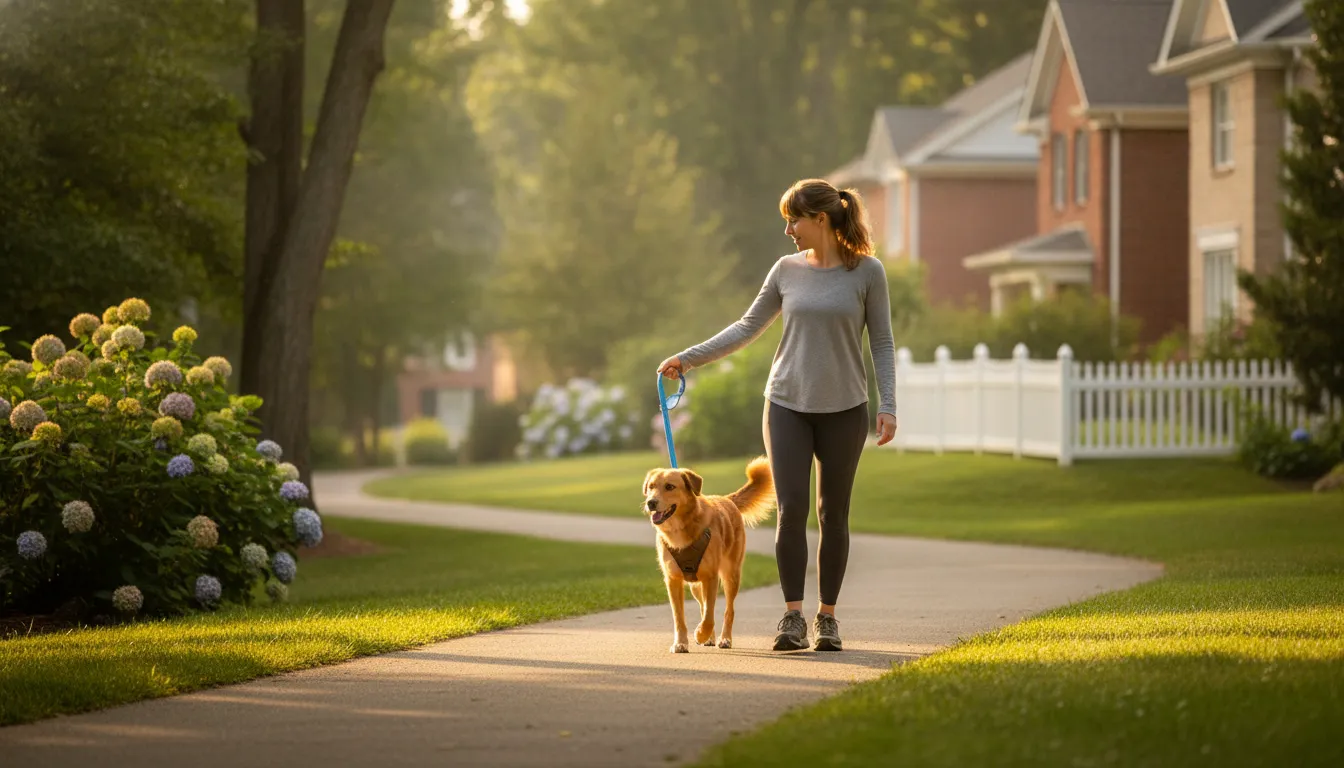
What to do when your dog pulls toward distractions
A smell, moving dog, bicycle, or familiar route can make pulling feel automatic. Often, the dog is overexcited, still building foundational leash skills, or eager to reach something interesting. That does not mean your dog is being stubborn. It means the environment is currently more compelling than the connection between you.
Start by creating more distance from the distraction. If your dog can still notice it and respond to your voice, you are in a workable learning zone. If your dog is lunging, staring, or unable to reconnect, move farther away or choose a quieter route. Leash training is not one-size-fits-all, so adjust the challenge to your dog's temperament and needs.
Reconnect before asking for forward movement
When the leash tightens, stop moving. Wait for a moment of slack, then acknowledge the choice and continue. This makes forward movement part of the feedback without turning the leash into a battle. It also gives your dog a clear answer to the question, "What works here?" Loose-leash walking takes patience and consistent practice, not one successful walk.
If your dog cannot disengage, calmly turn away from the distraction and invite your dog to come with you. A quiet 180-degree U-turn can encourage reconnection, followed by a reward for returning attention to you. Keep your body language steady and your direction clear. The goal is to help your dog work through pressure, regulate emotion, and make a better choice, rather than simply suppressing the pull.
Use distance, rewards, and appropriate breaks
Reward the behaviors you want to see: looking back at you, walking with a loose leash, or pausing instead of surging ahead. Praise, petting, or treats can encourage a dog to repeat nice walking, and rewards may be delivered frequently at first. As the skill improves, you can vary treats with environmental rewards, such as allowing your dog to investigate a safe smell after reconnecting.
Sniffing is not automatically a problem. A planned sniff break can give your dog an appropriate way to enjoy the environment without deciding that pulling is what earns access. Set the expectation first, then release your dog to explore when the leash is loose.
Apply the same response consistently. If pulling sometimes earns access to the dog, person, or smell ahead, the behavior can become harder to change. Keep sessions short enough for your dog to succeed, increase difficulty gradually, and seek professional help before leash training if fear, anxiety, or aggression is present. For more background, review UC Davis guidance on loose-leash walking.
How to choose a training tool that supports the method
The right tool should make communication clearer while leaving room for your dog to learn. It should not be expected to solve pulling on its own. Consider how each option fits your dog's body, how it communicates during movement, and what you want the walk to teach.
| Option | Fit and communication | Best purpose |
|---|---|---|
| Ordinary forward-motion walking | A standard collar or leash setup may be familiar, but it gives limited guidance when a dog is highly excited. If forward motion continues while the leash is tight, the pulling can become rewarding. | Useful for calm dogs who already have a foundation, as long as the handler pauses when tension appears and resumes when slack returns. |
| Front-clip harness | The chest attachment can redirect a dog sideways when they pull. That change in direction may help interrupt forward momentum, but the handler still needs to teach attention, slack, and reconnection. | A practical management option for walks while the dog builds more consistent leash skills. Fit should be checked carefully, and the dog should be introduced to it gradually. |
| The Sidekick Transitional Leash | This multi-purpose behavioral training tool uses natural pressure points to support clearer communication and calm thinking. It is designed to help a dog work through pressure rather than simply react against it. | A training tool for putting the Become Your Dog's Hero method into practice, with focus on emotional regulation, better choices, and a stronger dog-handler relationship. |
Think of the equipment as part of a conversation, not a shortcut. Your timing still matters. Pause when the leash tightens. Wait for slack or a check-in, then continue. Reward the behavior you want to see with food, praise, or an appropriate chance to sniff. With consistent practice, the tool can support the larger answer to how to stop dog from pulling on leash. Teach calm communication and purposeful choices rather than relying on pressure alone.
For dogs with pain, fear, or significant reactivity, have the equipment fit assessed and consider guidance from a qualified training professional before increasing difficulty.
Explore The Sidekick Transitional Leash
Frequently Asked Questions
How do I stop my dog from pulling on the leash?
Start in a quiet area and reward your dog for checking in, walking beside you, and keeping the leash loose. When the leash tightens, stop moving and wait for slack or reconnection before continuing. This keeps forward motion from rewarding the pull and gives your dog a clear, calm choice.
Why is my dog pulling on the leash?
Pulling often comes from overexcitement, an incomplete foundation, or a strong desire to reach an interesting smell, person, or sight. Look at the emotion behind the behavior instead of treating your dog as disobedient. Short practice sessions can build calmer communication before you add busy distractions.
What is the be a tree method for leash training?
When your dog moves ahead and creates tension, plant your feet and become still. Wait quietly for your dog to look back, step toward you, or otherwise create slack. Mark that calmer choice, reward it, and then resume walking. With repetition, your dog learns that a loose leash makes forward progress possible.
What is the U-turn game for loose-leash walking?
If your dog pulls ahead, turn 180 degrees without jerking the leash and walk in the opposite direction. When your dog notices, reconnects, and catches up, reward the choice to follow. Practice first in a low-distraction space so the turn becomes a calm communication cue rather than a surprise.
Should I use leash corrections to stop pulling?
Avoid leash corrections, choke chains, and prong collars. They can cause pain and increase fear or reactivity, which may make walking harder. Calm handling, clear boundaries, natural guidance, and reinforcement for the behavior you want support a more reliable relationship-based foundation.
Ready to build calmer walks?
Consistent practice becomes easier when you have a clear method for communication and a training tool that supports it. Explore the Become Your Dog's Hero method and learn how The Sidekick behavioral training leash can help you practice calmer, clearer walks with your dog.


